Sunday, July 3, 2016

Eyre Peninsula - east coast


Murray river at Loxton

We’re on the road again after a 2 year break so it’s time for a new blog.
We left home towards the end of May and headed across Victoria into South Australia through Loxton, Burra and across to Port Augusta. These are all areas we have covered in the past so we moved fairly quickly to this point. From here we were into new territory as we moved down the east side of the Eyre Peninsula.


Wyalla was our first stop and this town was a great surprise. All we really knew was that it was a steel town which had been in the news a lot recently due to the uncertain future of the steel works. There is much more to the area. 
We drove out to Point Lowly and Fitzgerald Bay with views of the Spencer Gulf.  We toured the HMAS Wyalla, a Bathurst class mine sweeper and anti -submarine boat, the first ship built at the shipyards in 1941. With a shallow, near flat bottom  and  only 9 feet below the waterline, she had an 80o  roll side to side, add to that moving through high seas and it was a very uncomfortable ride, often in overcrowded conditions due to rescues from sunken ships in the waters around the north of Australia.
The Mt Laura Homestead Museum had a wide range of exhibits and is worth a visit, and the signage on virtually every exhibit has notable spelling errors to the point where it almost seemed deliberate – perhaps for visiting school groups?
Tumby Bay jetty
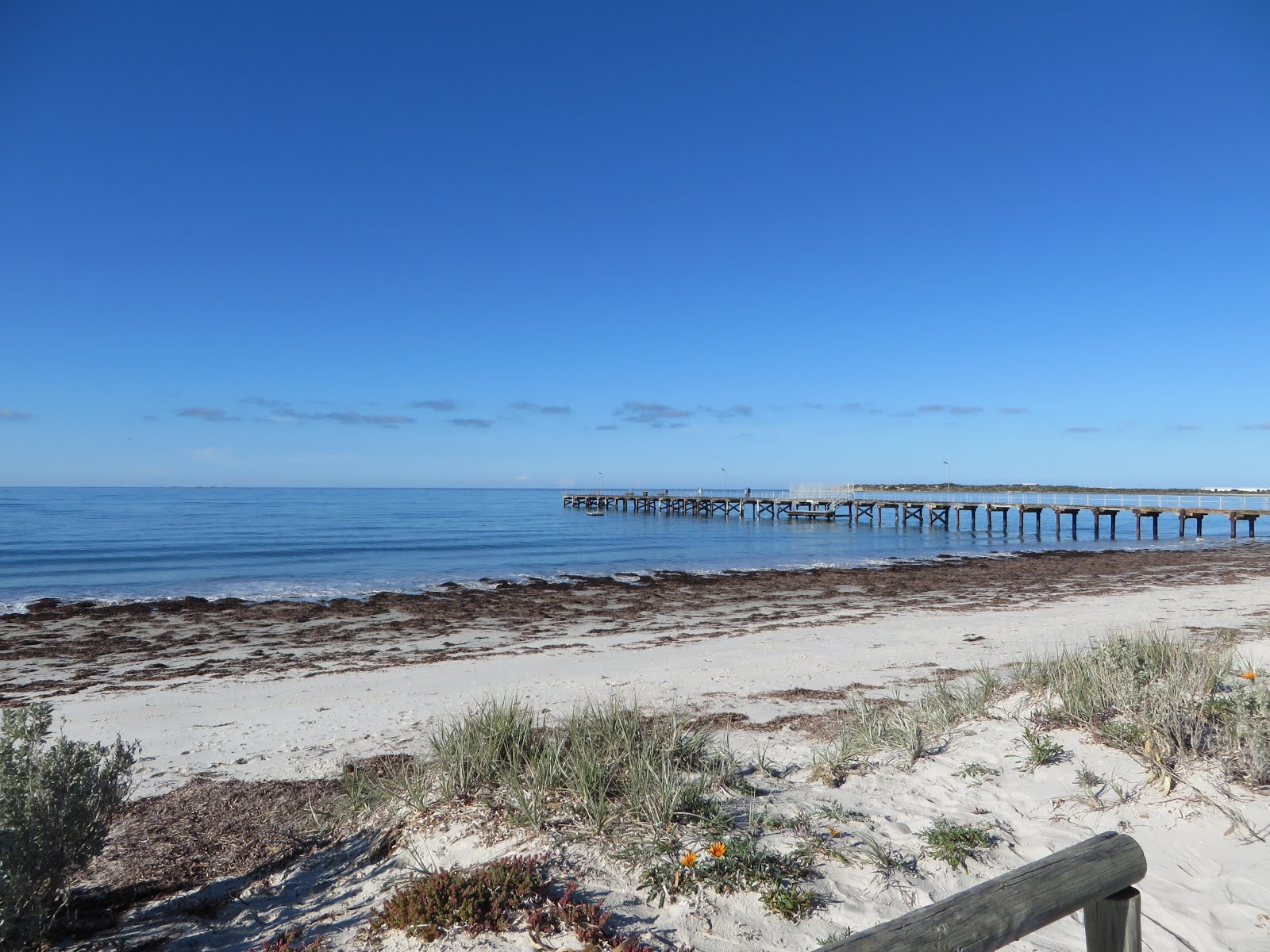
We moved down the east coast of the Eyre Peninsula stopping at Cowell and Tumby Bay, both pretty little seaside towns, then on to Port Lincoln at the southern tip of the peninsula.The weather could have been better but we visited the Axel Stenross Maritime Museum where restoration work is still done on old vessels. An entertaining afternoon was spent on board the “Tacoma” a tuna fishing boat built at Port Fairy in the 1940’s and we learned a lot about tuna fishing in the Port Lincoln area.
Scruffy at Winter Hill lookout Port Lincoln

Sunday, December 14, 2014

What happened in 2014?


Ferry crossing on the Murray River at Cadwell
This year our winter destination was the Northern Territory and into Queensland. We headed off at a leisurely pace through western Victoria, across into South Australia, spending a few days in Burra and other points of interest, then north through Hawker and up to Lyndhurst with the beautiful Flinders Ranges on our right as we moved north.
Flinders Ranges from Merna Mora Stn near Hawker
 A stop at Leigh Creek was the last chance for provisions as we were heading into outback country but we left getting fuel till we got to Lyndhurst, knowing there was a service station there and it was supposed to have LPG. Unfortunately the pub is now only the place with fuel in Lyndhurst and only diesel so if you drive a petrol vehicle, you’re out of luck. Glad the old bus is diesel!
Old police station at Farina
20 kms up the Oodnadatta Track from Lyndhurst is Farina Ruins. In the last 6 -7 years the township, abandoned in 1960, has been transformed from a vandalised ruin of old tumble down buildings into a lovely spot to stop for a few days.

 Preservation and restoration work is being carried out by a team of volunteers, there is a shady camping area with toilets & showers for $5pp pn, and best of all the 1882 underground bakehouse operates during the tourist season (cooler months) turning out breads, sausage rolls, scones and other delicious goodies. Income from the bakery helps fund the restoration work on the old township.
Water across the Oodnadatta track - mud instead of dust!


We spent 2 days at Maree while the track dried out a bit after a decent rainfall, then continued at a leisurely pace as there is so much to see along the track.


We took 4 more days to travel 400km to Oodnadatta where communications finally caught up with us in the form of a note stuck to the cash register at the Pink Roadhouse. Sadly Jill’s father (98) had passed away in New Zealand.
Next morning we had a 200km run to Coober Pedy, the nearest town of any size. On the way a stone hit the rear window of the bus, 7-8 feet off the ground but luckily the plastic privacy film on the inside held all the shattered glass together. There were no flights out of C.P that day so it was overnight bus to Adelaide, plane to Melbourne, taxi home. Then having collected clothes, passport etc, back to the airport and off to Auckland, returning a week later after the funeral and some family time.
The shatter glass slowly collapsed
Meanwhile, Allen started to head back to Melbourne in the bus. The air turbulence from passing trucks made the plastic and shattered glass sag more and more but at Port Augusta he found a large card board box to flatten out to cover the gaping hole and he was back home within a couple of days.


That was the end of our travels this year. It took several weeks to fix the bus window. No replacement available so perspex type material was used, the biggest problem was getting it done outdoors in wet and windy Melbourne. We used the extra months at home to get a few jobs done and to work on our other Moke which hopefully will be back on the road by new year.

Allen has damaged his knee and will have surgery in January but with luck we will be adventuring again in 2015.

We are looking forward to Christmas as our son and daughter-in-law will be with us for a couple of months from Canada. It is some years since Peter has been home and Annette has never been to Australia so we will be doing our best to show them a great Aussie Christmas in the sun.

Wednesday, January 15, 2014

Making our way south

Kuranda Scenic Railway
After the Cape York trip we returned to Cairns for 5 days to do urgent maintenance on the bus, collect our Moke & trailer and spending some more time with friends including a day trip to Kuranda on the scenic railway. This is a “must do” trip for any visit to Cairns area as the train winds up the steep hills to a tropical village with an exotic butterfly house and bird aviary among the attractions.

Our plan was to spend a couple of days at Mareeba on the tablelands above Cairns but on the first morning there Allen got bitten by a redback spider which led to 4 days in the local hospital and several courses of strong antibiotics. It was 19 days before the swelling in his leg went down enough to be comfortable to drive. This gave me time to wash most of the red dust off the bus and we visited some of the local attractions like the historic village and Becks Military Museum – privately owned and one of the best collections we’ve seen, lots of interesting planes and tanks plus many engines from wrecks and other miscellaneous parts.
Sausage tree at Greenvale

 From Mareeba we travelled fairly short distances for a few days as the spider bite was still causing pain and gradually we made our way south with stops at Ravenshoe, then through Mt Garnet and down the Gregory Development Road to Greenvale which is a former mining town established in the early ‘70s. The mine closed but there is still a small community of 170 residents and excellent facilities – Olympic size pool, basketball courts, hotel, caravan park, police station etc.

On through Charters Towers and Belyando Crossing where the lorikeets shared our chocolate milkshakes, and climbed all over us with hot little bird feet.
Through Emerald and down to Banana (named after a big yellow bullock) to stop at Theodore for a couple of nights for a river festival before a stop at Gil Weir outside Miles where we once again got a flat tyre fixed.  All the flats were due to grit getting through the split rims on the rough Cape York road and rubbing between the tube and the tyre. We were getting very sick of changing wheels!

Monty's Garage - Glenmorgan
 At The Gums crossroads between Miles and Goondiwindi we got side tracked by a sign to a Motor Museum and this took us 55km west to Glenmorgan, a tiny town created by the railway for produce shipment, and then within 50 years reduced to a few residents after trucks took over the bulk haulage from farms. The Motor Museum is a private collection, mostly old Fords. Monty’s garage is set up like an old service station and garage with cars “For Sale” out the front. It is run on the honesty system with a donation box on the counter and you can just walk right in. Free camp in the town with showers.
We crossed into NSW at Goondiwindi and turned east on the Bruxner Hwy along the state border, spending a night on the side of the road above Tenterfield. Although it was a highway, only 2 vehicles went past all night.
Jacarandas at Grafton
We had a few nights at Casino again to catch up with friends then drove down through Grafton where the old jacaranda trees were in full bloom down the streets lunching at the Village Green Hotel ($8) before we headed through the hills towards Armidale. The road was very windy and quite narrow, climbing up into the dividing range again, some corners 25kph. However there wasn’t much traffic. This road called The Waterfall Way but as it had been very dry the falls were not flowing strongly.
We by-passed Tamworth to stop at Quirindi and visited Bob’s Shed, a private collection of old goods from the ‘40s & ‘50s – old grocery shop goods like treacle tins, flour packets, weetbix, aspros etc. Another section had workshop goods like oil bottles, plus model cars, trains etc all carefully displayed. He also had a car collection – all Holdens ‘70s & ‘80s and lots of Peter Brock memorabilia. The shed was part way up to the town lookout called Who’d a thought it, which gives a 360o view of the surrounding district.

BANG!

With major bush fire threatening in the east we took lesser highways to move south-west through Gulgong and catching an Open Garden Day at Wellington which gave us the opportunity to visit several country properties and see what beauty can be created in very dry conditions. Next morning we hadn’t got far from the town when we got a vibration through the steering. We stopped and checked tyres which seemed OK but the vibration was still there and a little further down the road the driver’s side front tyre blew! Luckily it was on a straight section of road with room to pull over and put out safety triangles so we could change a wheel – again.


If you’re passing through Molong there is a great Collectables/Junk shop/junk yard on the northern side of town. It is a wonderful stopping place with something  for everyone – from novelty salt and pepper sets to car bits and scrap metal art – you can’t miss it because of the giant frog on a bike out the front.

A few more days and small towns saw us home in Melbourne by the beginning of November where we will pass the summer on vehicle and home maintenance before the next adventure.

Saturday, October 12, 2013

Cape York Adventure - Part 3

We left Seisia on the 19th of August and over the next few days retraced our steps back down the road to Bramwell Junction then straight on down as far as Musgrave Roadhouse where we turned east into Lakefield National Park.
Nifold Plain termite mounds

We stopped at an open grassland area called Nifold Plains where there are hundreds of big Cathedral termite mounds and also the flat magnetic termite mounds which all align N – S and look like rows of tombstones.
Hann River


Two days were spent at a lovely camp spot beside the river at Hann River Crossing in the National Park and we saw our first crocodile (luckily on the other side of the river). The camp spot was protected by a rocky drop off of about 7 feet where the river has cut down through an old lava flow. The rest day was spent relaxing, bird watching and looking for crocs.
Magpie geese and waterlilies


As we moved through the park we stopped at several lagoons and billabongs covered in waterlilies and populated with native water birds and we saw brolgas and even a jabiru.
Fresh water crocodile (approx 3 metres)


One overnight stop was at Kalpowar, another camp area by a causeway crossing the Normanby River where a fresh water crocodile posed for pictures, and another stop was near the Old Laura Homestead, an old pioneer property established to supply gold miners in 1879 and was last inhabited in the 1960’s. It is now restored and protected within the national park.
Fording the Laura River

From here we travelled through hill country over the Battlecamp Range, fording several shallow river crossings until we finally reached the coast at Cooktown and the first continuous sealed road for 22 days.
Cooktown is famous as the place where Cook beached the Endeavour to make repairs in 1770 and made contact with local aboriginals. They also saw kangaroos and were at a loss to try and describe them in a way anyone in England would understand.

Inside The Lions Den Hotel
Our last day of this adventure took us to The Lion’s Den Hotel and camp area on the road to the Blomfield Track. The old pub was built in 1870 and hasn’t changed much over the years, retaining its pioneering outback character – uneven floors, corrugated iron walls covered in signatures and surrounded by huge mango trees. The wall signatures started when miners used to leave their money with the landlord and record the amounts beside their names.
Next day we said goodbye to our fellow travellers and headed back up to Lakeland where we collected the fuel filler cap left there four weeks and a couple of thousand kilometres ago.

Wednesday, October 2, 2013

Cape York Adventure Part 2

Giant termite nest at Bramwell Junction
From Weipa we cut east on the Batavia Downs road to the Telegraph Road up to Bramwell Junction. From here the Old Telegraph Track, used by the 4WD adventurers, goes straight north, while the By-pass Road wiggles it’s way north to avoid the deep creek crossings. The road conditions deteriorated with corrugations and some sand so at times we zigzagged across the road looking for the least damaged surface. Sometimes this was outside the road-marking posts along the edge of the bush.


Fruitbat Falls
We camped one night in the bush on a track by the road. This gave us the opportunity to visit Fruit-bat Falls on Eliot Creek near the point where the By-pass crosses the Old Telegraph Track before continuing on to the Jardine River. The Falls are a wide curve of water cascading about 2 metres over a rock shelf with a large swimming hole below them. The water was around 22o and very refreshing.


Jardine River Ferry
Northern most tip of the continent
We crossed the Jardine River by ferry and made our way to the small townships in the far north where wild horses wander the roads and through the camp grounds. We had got as far as we could go with 2WD vehicles.
We spent 3 days each at Loyalty Beach and at Seisia which are not far apart, and used them as a base to see the surrounding areas. Those of us without 4WDs clubbed together to hire a vehicle to do the last few kilometres up to “The Tip”. The road, winding through tall tropical forest, was narrow and had several deep waterholes which added to the fun.From the end of the road there was a 15min climb over the rocky hill and down to the tip and the famous sign. The view north was of small offshore islands, east was rugged and windblown cliffs & west was a sweeping white beach.
A short drive east took us to Somerset, site of an early attempt to establish a government headquarters in the far north – grand plans which failed but the area became the home of the Jardine family.
A day trip by boat to Thursday Island in the Torres Strait was a highlight of the trip with a tour of the island and a visit to Green Hill Fort est. 1891 with guns which gave coverage of the passages between all the surrounding islands. It is now a museum with fort and pearling industry exhibits. Because of the pearl shell diving, the local population has a multicultural background with many Japanese divers buried on the island. Pearl shell was used for buttons before the invention of plastic.

Some of the islands of the Torres Strait

Monday, September 23, 2013

Cape York Adventure - Part 1

When I started to write this page I realized that there was so much to tell, it would have to be done in several parts.
Seven vehicles with 13 people set off for the top
In early August we met up with some old friends and some new ones to start our big adventure to the tip of Cape York, the northern-most point on the continent. The trip was to take four weeks and on day 2 we were already off the sealed roads onto gravel only occasionally relieved by very short sections of seal which became more and more scarce as we traveled north.
Ancient aboriginal rock paintings
An early highlight of the trip was a stop at Split Rock to look at ancient aboriginal rock paintings up on the hillside above the highway. The paintings are quite accessible after a climb up towards the sandstone bluff and are in good condition with interpretive signage.

Roadworks on the Peninsula
 Development Road


Roadhouses occur at well spaced intervals along the route north, usually near a river crossing and they have fuel, food, basic supplies, and often a hotel licence. They usually provide unpowered camp spots and amenities blocks and some have basic motel rooms. There are no towns to pass through other than Coen, so the roadhouses do a good trade during the tourist season but have to survive the wet season when there is no traffic and they can be cut off by flood waters. They all have walls of flood photos interspersed with giant crocodile and wild boar pics.
Two nights were spent beside the river at Coen and one at Archer River and at both these spots we could relax in the cool river water as there were no crocodiles.
Archer River in the dry season

Fifty Kilometres north of Archer River, the Peninsula Development Road veers off to the north-west and the bauxite mining town of Weipa, while the Telegraph Road continues almost straight north to Bramwell Junction.


Bauxite mining- dirty, dusty work
We went to Weipa and spent two nights taking a bus tour of one of the bauxite mine sites which included a tour of the township and plenty of warnings about the local crocodile population. Bauxite is found in a layer 5 -7 metres deep just under the topsoil and is just scooped up and loaded into huge trucks and after minimal grading, is loaded onto a short rail track to the dock then transferred to ships to go to refineries to become aluminium. Bauxite is terracotta red – and so is everything else in the area because of the dust. Under the bauxite layer is ironstone – almost the same colour – and it is used to build and repair most of the roads on the Cape York Peninsula so everything on the roadside has a red coating of dust. Actually the western side of the road is red; the eastern side is green as the area receives the prevailing south-eastern trade winds most of the season.
Sunset at Weipa

Saturday, August 10, 2013

Going North in Queeensland

We got out to the coast at Townsville where we finally caught up with the seemingly thousands of travellers in motorhomes and caravans, all escaping the southern winter for the dry season in Queensland. It was the weekend that the V8 Supercars were in town so accommodation was at a premium. We did get several beautiful fine days in the Townsville area and were amazed by the difference in the vegetation – at last we were seeing palm trees and lush vegetation in the parks and gardens. Plant which we struggle to grow indoors in Melbourne thrive wild and natural – stag-horns and climbing greenery everywhere and so many different types of palms.
A couple of relaxing days were spent at Toomulla Beach not for from Townsville but it was not a good beach for swimming. The wind was blowing in strongly although the camp was protected by coastal vegetation. We moved slowly north to Ingham, then Mission Beach and Innisfail but the weather was unseasonably wet and windy. The area has largely rebuilt after Cyclone Yasi but the vegetation will take years to recover.
Dunk Is. from Mission Beach foreshore -
not what you see in the travel adverts.
Mission Beach used to have big trees all along the foreshore, now the surviving few are tattered and broken. We did not see the Queensland of the tourist brochures with perfect sunny days but there’s always something new to see and amuse like the traffic warning signs showing collisions between cars and cassowaries on the way to Mission Beach and the rainforest in the area was beautiful.

Little Millstream Falls - Ravenshoe
We still had a couple of weeks before we were due in Cairns so from Innisfail we turned inland up through the Misty Mountains to the Atherton Tablelands spending a few days at Ravenshoe where there is budget camping at the Railway museum. Unfortunately their steam locomotive was not running.
Kookaburras at Millstream Falls
 We visited some of the lovely waterfalls in the area and drove some very twisty hill roads in the Moke  - but it still rained!
Next stop was Herberton where we stayed for over a week visiting local tourist areas like the Pioneer Village (excellent) and through the hills on dirt road to Irvinebank for the day. 

Speedway competitor


We went to a Sunday market and the local speedway at Wondecla – great entertainment though by the last race of the day there were a lot less cars left.

Dave, Allen & Grace at Green Island
At Cairns we caught up with a fellow Moke owner, Dave and spent a very enjoyable day with him and his friend Grace on a boat trip 9km out to Green Island, a coral atoll which forms part of the Great Barrier Reef. We viewed the coral and the tropical fish and turtles from a glass bottom boat and walked round the island before a fairly rough trip back. That night we had dinner at the RSL with Dave, Grace and Dave’s mum, Elsie, and next morning we left our Moke and trailer in Dave’s care as we headed out to start our adventure to the top of Cape York.